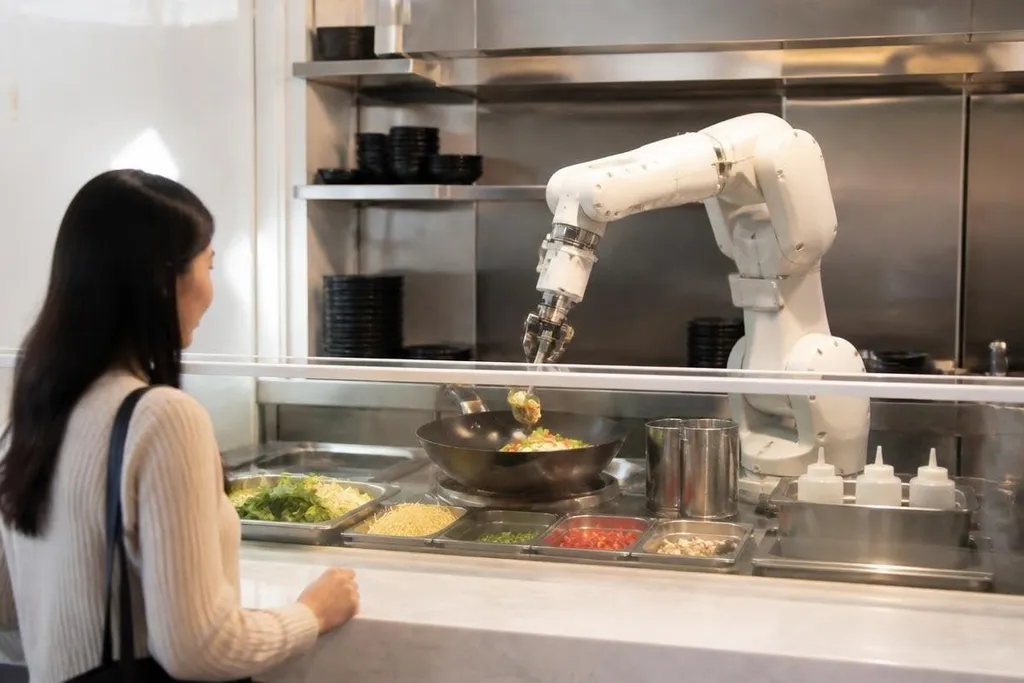
People may accept food made by robots when the machine makes a familiar meal, keeps the kitchen clean, and shows how it handled the food. The hard part is not getting a robot to move ingredients. It is earning trust at the plate.
- Taste comes before the robot’s novelty.
- Clean handling matters as much as speed.
- People need a clear reason to choose the machine-made meal.
Taste comes before the machine
A robot can measure ingredients, repeat motions, and follow a cooking program. Those abilities matter only if the meal tastes good when it reaches the customer.
That puts the focus on the food, not the arm, gripper, or software. A customer may enjoy watching a robot cook once, but a second purchase will depend on flavor, texture, portion size, and price.
The best starting point is a meal with clear steps and repeatable results. Measured ingredients, timed heating, or a fixed assembly task may suit automation well. Foods that rely on last-second judgment are harder to explain and harder to trust.
People also need to know what the robot actually did. “Made by a robot” could mean the machine cooked the meal, placed ingredients in a container, or handled one step while a person did the rest. Clear wording prevents the machine from becoming a distraction from the food.
Trust begins in the kitchen
Food creates a stricter test than many other robot tasks. A small error in a factory may stop a line for inspection. In a kitchen, poor handling can affect what a person eats.
A food robot needs cleanable surfaces, controlled ingredient storage, and a clear way to flag mistakes. Staff still need access to the machine, especially when an ingredient spills, a package tears, or a sensor reads the setup incorrectly.
The customer does not need every software detail. They do need useful answers: who checked the ingredients, how the robot handles changes, and what happens when the machine stops.
A visible person at the counter can help, but only if the team can explain the process in plain words.
The customer sees the finished meal, while the kitchen pays for loading ingredients, cleaning tools, repairs, and staff time. Robot24.com's food robotics reporting can tie those tasks to a named robot, test setting, and measured result. The next question is the bill: does the robot cut enough paid work to justify its price?
The price has to make sense
A robot-made meal needs a reason to exist beyond the novelty. That reason could be a lower price, a shorter wait, a meal made with fewer staff steps, or a menu that stays consistent during busy periods.
Those benefits still have limits. The machine needs cleaning, repairs, ingredient loading, and people who can respond when the task changes. If automation adds work behind the counter, the customer may see little benefit from it.
Speed can also create the wrong impression. A machine that moves quickly while making a poor meal has failed at the part people care about. A slower system that handles one menu item well may have a better case, especially when its work is easy to check.
I'd try a robot-made meal once without much hesitation, but I'd return only if the food and price held up.
What customers will look for
People will form their view from small details. They may notice a worker wiping a surface, a clear ingredient label, or a screen that explains a delay. Those details answer a larger question: can the kitchen be trusted when nobody is watching closely?
The machine also needs a role people can understand. One that handles hot pans or repeated portions may feel useful. A machine added only to attract attention may make the meal feel like a test rather than a service.
Privacy can matter too. If cameras record workers, customers, or food preparation, the operator should explain what the cameras do and how long data stays available. The answer belongs near the machine, not in a document nobody reads.
A practical test before buying
Use these checks when you visit a robot-run food counter or review a system for a kitchen:
- Taste the repeat order. Buy the same item twice and compare the result.
- Watch the handoff. Check who verifies the meal before it reaches you.
- Ask about cleaning. Find out which parts staff remove and clean by hand.
- Check the backup plan. Ask what happens when an ingredient, sensor, or motor fails.
- Read the price. Compare it with a similar meal made through a standard kitchen process.
A robot does not need to cook every meal to earn a place in food service. It needs one clear task, a meal people want again, and a kitchen process that remains understandable when the machine stops. The next useful test is a second order, made on an ordinary day, at the same price.